
Struggling to figure out what your viewers actually want? You're not alone. Most YouTube creators guess what to make next, and most of the time, they guess wrong.
The truth is: your audience is already telling you what they want. You just need to know where to look.
Most creators rely on gut feeling or copy trending channels instead of analyzing what their specific audience actually values.
Many creators rely on gut feeling or copy what trending channels are doing. But what works for a channel with 1 million subscribers won't necessarily work for yours.
Your audience is unique. They subscribed to you for a reason. The key to growth isn't chasing trends blindly, it's understanding the specific people who watch your content and giving them more of what they value.
The good news? You already have all the data you need. It's sitting in your comment section, your analytics dashboard, and the patterns in your best-performing videos.
Every comment is a viewer telling you what they liked, what confused them, and what they want next — making it the most underused resource for content strategy.
YouTube comments are the most underused resource for content strategy. Every comment is a viewer telling you something: what they liked, what confused them, what they want next.
The problem? Reading hundreds or thousands of comments manually is exhausting. And most creators stop after the first 20.
That's where AI tools can help. TubeFeedback analyzes your entire comment section in seconds and gives you a clear summary of what your audience is saying: recurring topics, sentiment, suggestions, and complaints.
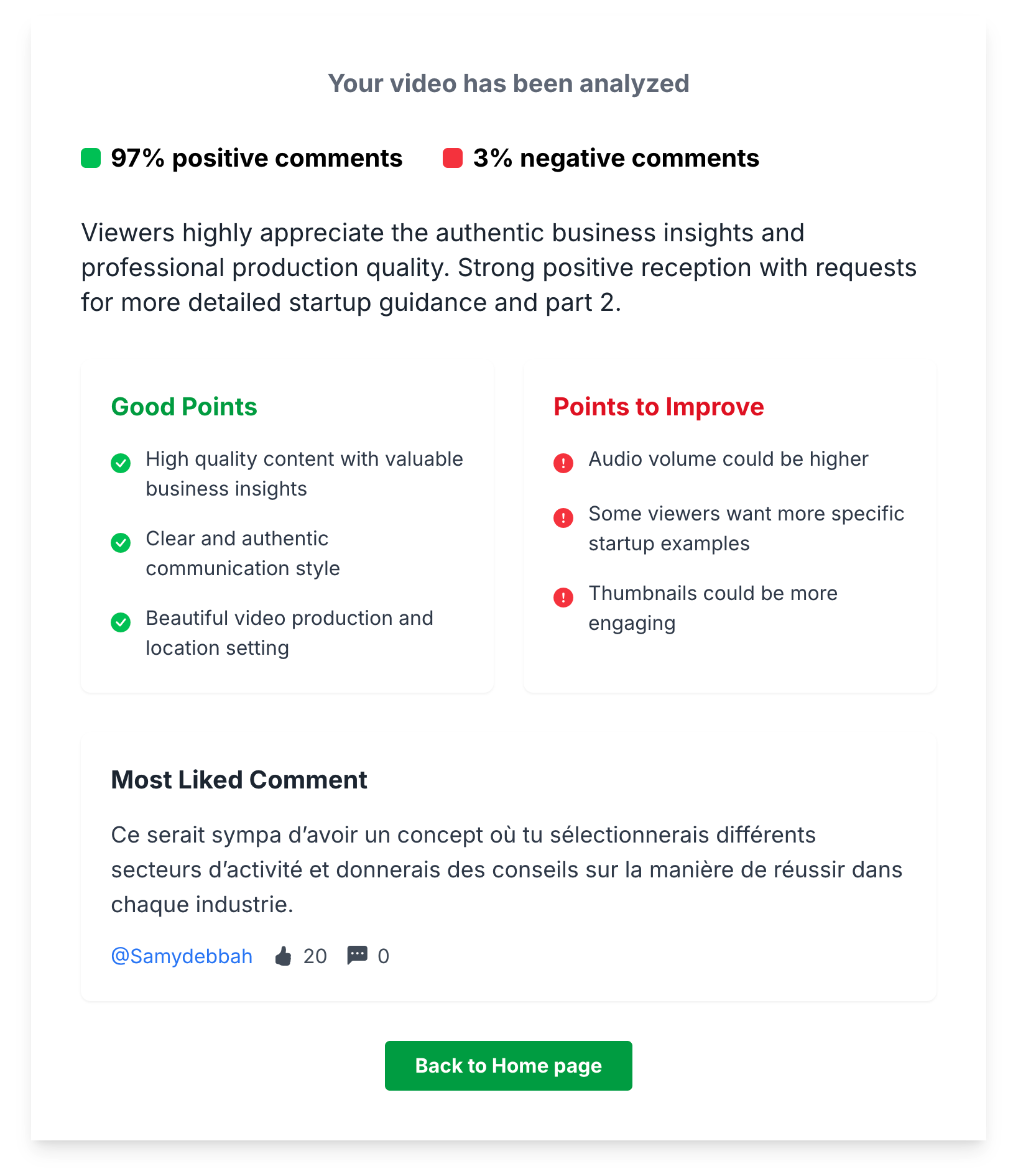
Instead of scrolling through comments for an hour, you get actionable insights in one click: what topics your viewers care about, what questions they keep asking, and what they want you to improve.
YouTube Studio gives you retention graphs, CTR data, traffic sources, and viewer demographics — focus on these instead of just view counts.
YouTube Studio gives you powerful data, but most creators only check their view count. Here's what to actually focus on:
Look at your top 10 performing videos. What do they have in common? That pattern is your audience telling you what they want more of.
Ask specific questions through polls, community posts, and end-of-video prompts — vague questions get silence, specific ones get answers.
Polls, community posts, and end-of-video questions are simple but effective. The trick is to ask specific questions, not vague ones.
Instead of "What should I make next?", try:
Specific questions get specific answers. Vague questions get silence.
Community posts with polls are especially powerful because they require minimal effort from viewers, so you'll get more responses.
Competitor comment sections reveal unanswered questions, recurring complaints, and content requests from your shared audience — gaps you can fill.
You don't have to limit your research to your own channel. Competitor comment sections are full of insights about what your shared audience wants.
Look for:
With TubeFeedback, you can analyze any public YouTube video's comments, not just your own. Paste a competitor's video link and instantly see what their audience is talking about, requesting, and complaining about.
Analyze your top videos' comments, list recurring themes, verify with analytics data, then plan your next 4 videos around those topics.
Understanding your audience is useless if you don't act on it. Here's a simple framework:
This approach removes the guesswork. You're no longer hoping a video performs well, you're making content your audience has already asked for.
Ignoring negative feedback, only listening to loud voices, changing everything at once, and overthinking your strategy are the most common pitfalls.
The best YouTube creators aren't the ones with the fanciest equipment or the most upload frequency. They're the ones who understand their audience deeply and create content that matches what viewers actually want.
Here's your action plan:
Stop guessing. Start listening. Your audience is already telling you exactly what they want.
